
Frequently Asked Questions
What can I expect from therapy?
I provide a free, virtual consultation to help determine if we may be good fit for working together. This 15-minute conversation can help ensure that you feel comfortable talking with me and that I feel that I am the best resource to assist you with your concerns.
Prior to your first appointment, you will complete some paperwork to provide some basic information about yourself and to ensure you are familiar with the Policies & Procedures related to our work together. Our first session will last 60-90 minutes, providing time for you to share your concerns, for me to gather additional information, and for us to mutually decide whether we feel it is a good fit for us to move forward working together in therapy.
From there, we will determine the frequency we will meet – often weekly when first starting. Each session may look a bit different as we grow our therapuetic relationship and discuss your concerns. We can work together to determine what type of session works best for you.
You are always welcome to provide feedback about your experience, let me know when something about our sessions is not working for you, or ask questions. It’s my goal to collaborate with you throughout your therapy experience.
What about payment? Do you accept insurance?
My services are all self-pay, which means that you pay for your sessions at the time they occur and I do not work with any insurance companies. You are welcome to view my current fees.
Payments are made via the credit/debit card that each client keeps on file via their private Client Portal account. In addition to your typical credit/debit card, my services are also eligible to be covered by HSA/FSA cards. You can learn more about why I have chosen not to work with insurance by reading this blog post.
What can I expect from teletherapy?
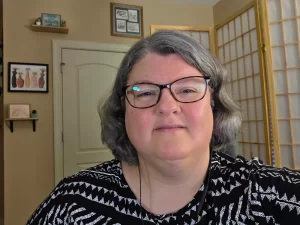
Teletherapy (also called telehealth or telemental health) means that I provide professional therapy services over the internet via video. I utilize a HIPAA-secure video platform for all teletherapy services, so that we can see and hear one another during the session. I can also provide instructions for use prior to our first session. There are some instances where teletherapy may not be appropriate; however, research has shown that telehealth can be as effective in reaching your mental health goals as traditional in-person counseling, with the added convenience of not needing to factor in a commute for your appointment.
You may wonder about the etiquette for a telehealth session since you are not coming to my office. You will need to be in a private location, within the state of NC, at the time of our session. Ensure you have a strong internet signal available. You’ll want to be appropriately dressed for an appointment, just as if you were coming to an office (i.e. wearing a shirt). Remove other distractions – turn off notifications on your device, arrange for childcare, don’t try to drive or shop during our appointment. You’re welcome to have comfort items or fidgets nearby, or to move around during our appointment, if that is helpful for you. For more details about getting the most out of your telemental health appointment, check out this blog post.
**Note: I am a licensed mental health professional in NC. Due to current licensing laws, I can only provide teletherapy to folks who are located within the state of North Carolina at the time of the session.**
Will you give me a diagnosis?
Because you will be paying for your therapy services out-of-pocket rather than utilizing insurance, there is no requirement that a diagnosis be given. There are times when a diagnosis is helpful in understanding what you’re experiencing or being able to receive needed services, and I am qualified to provide a diagnosis when needed. There are also instances where someone may prefer not to have a diagnosis. Should you choose to schedule with me, I am happy to discuss diagnosis further and answer any questions during our work together.
How can I be assured all aspects of my identity will be honored and accepted?
Each of us embodies multiple identities. These include (but are certainly not limited to) race/ethnicity, body size, socio-economic status, neurotype, sexuality, gender identity, and spirituality. I actively work to recognize and provide a therapy space that honors whatever identities you may bring into our work together.
I believe that ALL bodies deserve respect, compassion, and access to services, and I work from a Health at Every Size (HAES), weight-inclusive perspective. I have sought out training in providing effective care to LGBTQIA+ folks. As a white therapist, I recognize the dynamics my race can bring into therapy when working with individuals who are Black, Indigenous, Asian, or other People of Color. I actively seek to be anti-racist and continue learning outside of session. I believe that a spiritual connection can be an important part of overall wellness, and my background of both religious studies and personal experience allows me to work within your spiritual beliefs, should you desire for that to be a part of therapy experience. Additionally, I continue to pursue education and training on providing trauma-informed, trauma-responsive, and neuro-affirming care.
While I strive to honor and accept all parts of you, I am aware that, as a human, I cannot do that perfectly, and invite you to call my attention to any instances where I may falter so I have an opportunity to initiate repair within our therapeutic relationship.
What about confidentiality?
Being able to trust your counselor to maintain your confidentiality is a crucial part of the therapy process. With very few exceptions, what you share in therapy will not be shared with others without your consent. If you tell me of a plan to harm yourself or someone else, I may need to break confidentiality in order to ensure everyone is safe. If you tell me about child/elder abuse that is currently happening, I may need to inform the proper authorities in order to help keep everyone safe. So, the instances where I would break your confidentiality – and I would still hope to be able to inform you first – would be when safety is at risk.
**A note about AI (Artificial Intelligence): I do not utilize any AI technologies in my provision of counseling services. Sessions are not recorded to assist with AI note taking. The optional AI services available with my Client Portal are not activated. If you have any additional questions regarding the use of AI, please feel free to ask during your consultation.

[Unless specifically noted, no content on this site was created using AI technologies. All content is the property of Michelle F. Moseley Counseling, PLLC]