

The messages we receive in childhood can leave a powerful mark. At times these messages are explicitly stated directly toward us. Other times these messages are the undertone of our interactions with others. Regardless of the nature of the message, we can sometimes find ourselves affected by them years down the road.
As a licensed mental health counselor, I have the unique experience of hearing from many people about the messages they received in childhood. These messages we receive as children often continue to impact life well into adulthood.
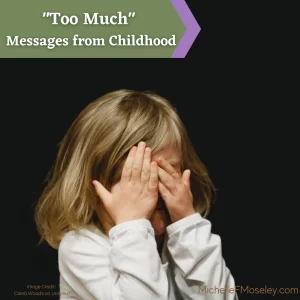
Many of the messages I help people recognize and overcome are related to being told they are “too much” at some point in their lives.
Messages of being “too much” can come from a variety of places. For many children, their main interactions happen at home with family or at school with peers and teachers, and these can be the environments where they learned they were “too much.”
Messages from Family
Imagine you’re a toddler, just learning to balance on your own legs and regularly frustrated because you keep falling down. You whimper. Maybe you even cry. You don’t have the words to say what’s wrong. But the only reaction you receive is a parent saying, “Don’t cry. You’re fine.” Or, perhaps worse yet, there is no reaction at all. You’re learning that your needs are “too much.” That to express them means you’re “too emotional.”
Imagine yourself a bit older, maybe 9 or 10. Your body is starting to experience the early changes that are a precursor to full-blown puberty. You’ve noticed some squishy spots in places they didn’t used to be, but you know you’re just growing and changing. Then, your mom offers to buy you a whole new wardrobe if you can lose some weight, get rid of those squishy spots. The message that you’re getting is that you’re “too fat” and that you need to take up less physical space.
Messages from School
You’re around 5 years old and have just started school. You’re figuring out the schedule and who you want to play with at recess. You approach a group of children on the playground and ask what they’re playing. They point and laugh, telling you that you can’t play because you’re too weird.
You’re around 11 years old and you have some struggles with reading, but your teacher keeps asking you to read in front of the class. To draw the attention away from your struggle, you learn to make jokes and get attention for being funny. Some of the other kids say that you’re not smart. The teachers make it clear they think you’re a trouble maker. You’re absorbing the message that you might be “too stupid” for school.
Sound Familiar?
Perhaps some version of these scenarios or messages sounds familiar to you. You might replay those messages from childhood in your head on a regular basis. Maybe you’ve been connecting the dots of how some of these messages influence your current behavior or struggles.
If you resonate with these messages, and are interested in working with a mental health professional to address some of the ways these “too much” messages are affecting your life, complete this contact form to schedule a free, virtual consultation.
This is part one of a multi-part series on how the messages of being “too much” can impact our lives. Stay tuned for the rest of the series, and see if the message of being “too much” may resonate with you or someone you know.
Michelle F. Moseley (she/her) is a Licensed Clinical Mental Health Counselor in NC. She believes ALL people deserve respect, compassion, and access to mental and physical healthcare. Michelle specializes in working with survivors of religious trauma, and with those who have body image concerns, finding there is frequent overlap in these areas. She also frequently supports late-identified neurodivergent individuals as they navigate the grief and relief of a new understanding of self. You can learn more about Michelle by visiting her website at MichelleFMoseley.com or following her on Instagram – @therapy_with_michelle
Sign-up for Michelle’s Monthly Email Newsletter to make sure you never miss a blog post