

January is Spiritual Abuse Awareness Month.
What is spiritual abuse? To understand spiritual abuse, it’s helpful to first have a foundation for understanding abuse in general.
Abuse happens when a person or group misuses power. This could be a parent misusing their physical power in interactions with their child. Abuse could be a friend using their persuasive power to coerce someone into making a certain decision. This could be a partner using their emotional power over a person who loves them for financial manipulation. Abuse could be an employer using their power over an employee to demand additional work hours are tasks.
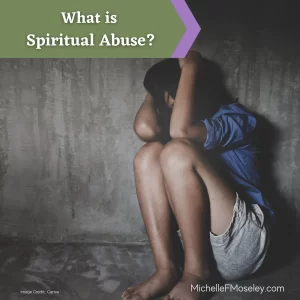
Spiritual Abuse is Abuse
Spiritual abuse occurs when power is misused within a spiritual or religious context. A spiritual / religious context can include a church, a religiously-affiliated group or organization, a parachurch organization, a spiritually-focused group, a spiritual or religious retreat, and many other settings. The context also includes the specific beliefs or practices that are a part of the particular religious or spiritual system.
When a person who is in a position of power within a spiritual community misuses their power, that is spiritual abuse. The person in power may include a pastor or other clergy person, a staff member, a lead missionary, a teacher or guru, or any other individual or group who holds power within a spiritual context.
Spiritual abuse can occur even if the abuser is unconscious of the impact of their actions.
In fact, many religious systems are set up in ways that create dynamics where the same individual is both a victim of abuse as well as a perpetrator of abuse. I’ll share more about that in a later post this month.
Spiritual abuse can also include other types of abuse, such as physical, sexual, emotional, financial, and relational. Any time there is a spiritual component to the misuse of power, it is important to consider spiritual abuse as part of the picture.
Defining Spiritual Abuse
Various organizations and individuals who do work related to supporting victims of spiritual abuse have offered definitions to help in understanding this abuse of spiritual power. Here are a few for your consideration:
From Reclamation Collective & Religious Trauma Institute: “Spiritual abuse is the conscious or unsconscious use of power to direct, control, or manipulate another person, or to influence one’s capacity for choice within a spiritual or religious context.”
From Karen Roudkovski in Understanding Spiritual Abuse: “Spiritual abuse is the misuse of power in a spiritual context in which a person or group uses coercive and manipulative methods of controlling the victim, resulting in the abused individual experiencing spiritual, emotional / psychological, or relational harm.”
From the Australian Violence Prevention Website: “Spiritual abuse happens when someone uses spiritual or religious beliefs to hurt, scare, or control you.”
From Rachael Clinton Chen of The Allender Center: “Spiritual abuse is a distortion and exploitation of spiritual authority to manipulate, control, use, or harm others, mostly through fear and shame.”
I am encouraged that some of these descriptions of spiritual abuse are coming from individuals and groups who maintain their own religious beliefs and practices. While some folks may need to walk away from religion after experiencing spiritual abuse; others are able to find healing and healthier ways to embrace their spirituality. As more religious groups / organizations seek to truly understand, prevent, and heal spiritual abuse, more survivors will have increased options for how to move forward in their healing journey.
Some Examples of Spiritual Abuse
You may be curious about more specifics of what types of events or behaviors can be experienced as spiritual abuse. The following examples are drawn from the Spiritual Harm & Abuse Screener developed by Dr. Dan Koch. Note that this screener was designed specifically with Christian churches / groups in mind, but many of the examples can apply to other types of spiritual contexts.
Consider how often you may have experienced any of the following:
- You were expected to consult your pastor / leader about all life decisions
- Your behavior was monitored by the leader or other group members, and possibly even “reported” to leadership
- You experienced extreme pressure to take on certain roles (leader, pastor, missionary, etc.)
- You experienced (or were aware of) vivid descriptions of concepts such as Satan, eternal punishment, or the end of the world being taught to children
- Scripture or other sacred texts were used to justify violence, often toward children, women, or those who believed differently
- You saw leadership protect or elevate abusive individuals
- You were denied (or saw others denied) opportunities to serve based on their gender
- You felt abandoned by your spiritual community during a difficult time
The Spiritual Harm & Abuse Screener also includes some examples of the emotions or internal experiences a person might have if they have experienced spiritual harm. These include:
- Self-hatred / lack of self-worth
- Feelings of isolation
- Difficulty navigating life outside the spiritual community
- Sadness / Anger / Grief
- Feeling betrayed by God or their Higher Power
Resources for Support
Are you realizing that you may have experienced spiritual harm? Perhaps you’re looking for more resources to help you understand spiritual harm? Whether you are a survivor, a mental health professional, a faith leader, or some mix of identities, here are a few resources for further support.
For Survivors
Working with a mental health professional who understands spiritual harm can be an invaluable part of healing. This may include individual therapy, as well as participating in groups with other survivors of spiritual abuse.
- Therapy with me – I offer both individual and group therapy for adults in North Carolina, focused on healing from spiritual abuse and religious trauma. Learn more about my services here. Learn more about the Wounded By Faith virtual therapy group that I facilitate here.
- Reclamation Collective – Search the Resource Directory for a licensed therapist or other support option that best meets your needs. Check out their Support Group options – virtual, 10-week groups that often focus on specific experiences or identities.
For Mental Health Professionals
Supporting survivors of spiritual / religious harm requires a foundational understanding of complex trauma, as well knowledge about the nuances of how religious trauma can impact a person’s life. I offer NBCC-approved Continuing Education trainings on topics related to spiritual abuse and religious trauma, as well as how these experiences can intersect with other parts of life. You can learn more about these continuing education opportunities here.
For Faith Leaders
Clergy and other faith leaders are often the first person that someone comes to when they have experienced spiritual abuse. If you are in a leadership role in a church, religiously-affiliated group, or parachurch organization, you are in a unique position to determine how reports of abuse will be handled and to help prevent additional spiritual abuse.
I worked in vocational ministry for almost a decade prior to transitioning to my current role as a licensed mental health professional, which means I am in a distinct position to help support faith leaders in confronting spiritual abuse. Check out the workshops and trainings that I provide to help faith leaders and spiritual communities gain more understanding and skills in the areas of mental health, trauma-sensitive gatherings, and handling / preventing spiritual abuse. Learn more specifically about Mental Health 101 for Faith Leaders here.
For Anyone and Everyone
This Religious Trauma Resource Guide is an ever-growing compilation of resources related to spiritual abuse, religious trauma, and other spiritual/religious harm. The Guide includes resources in all sorts of formats – books, podcasts, websites, social media, etc. – and is open to recommendations from others. I’m hoping to be able to add more resources that focus on various spiritual backgrounds and/or personal identities, so please let me know if you have any suggestions (or updates).
What is spiritual abuse? I hope you’ve come to the end of the post with a bit more clarity about what people mean by the term, and some of the ways that spiritual abuse might be experienced. Stay tuned for more posts in the coming weeks for Spiritual Abuse Awareness Month, and feel free to click the “Religious Trauma” tag at the top of this blog page for older posts on related topics.
Michelle F. Moseley (she/her) is a Licensed Clinical Mental Health Counselor in NC. She believes ALL people deserve respect, compassion, and access to mental and physical healthcare. Michelle specializes in working with survivors of religious trauma, and with those who have body image concerns, finding there is frequent overlap in these areas. She also frequently supports late-identified neurodivergent individuals as they navigate the grief and relief of a new understanding of self. You can learn more about Michelle by visiting her website at MichelleFMoseley.com or following her on Instagram – @therapy_with_michelle
Sign-up for Michelle’s Monthly Email Newsletter to make sure you never miss a blog post