
Rejection Sensitive Dysphoria (RSD), also commonly called Rejection Sensitivity Dysphoria, is the intense emotional pain that some individuals experience when faced with real or perceived criticism, rejection, or failure. RSD was first named by Dr. William W. Dodson in the 1990s, as he observed the emotional reactions that many of his ADHD patients experienced when faced with rejection or criticism. While RSD is not an official diagnosis, many neurodivergent individuals find that this term describes their own internal experience of rejection.
I’m Michelle F. Moseley, a licensed mental health counselor in North Carolina who specializes in working with folks who have frequently been told they are “too much.” Many of my therapy clients are neurodivergent, meaning that the way their brain functions differs from what is considered “typical” in their societal context. Neurodivergence includes things such as ADHD, Autism, cPTSD, OCD, bipolar disorder, Tourette’s, and more. I am also late-identified Autistic, and spend lots of time learning about and discussing the experience of rejection sensitive dysphoria.
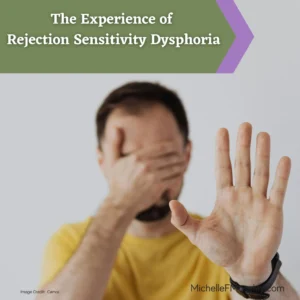
Important Things to Know About Rejection Sensitive Dysphoria
The intensity of RSD responses is the same for both real and perceived experiences of rejection or failure. The person with RSD is often very attuned to the slightest change in tone or shift in body language and their nervous system may perceive that as rejection. This leads to the same intense emotional and physical response as occurs with more blatant rejection. Rejection Sensitive Dysphoria is kind of like a guard who is constantly watching to find and protect from rejection, but who watches so hard that they find it in places it may not exist.
RSD was first noted as an experience of individuals with ADHD. However, many individuals (with or without an ADHD diagnosis) who experience emotional differences have described personal accounts of rejection sensitivity. Folks who are Autistic, or who meet criteria for borderline personality disorder or complex PTSD often have intense experiences of rejection sensitivity. This may look different depending on the person, but can also be a form of rejection sensitive dysphoria.
The Internal Experience
We all experience rejection in life. The intensity of the internal experience is what sets RSD apart from more general experiences of rejection.
Not every person with RSD experiences it the same way, but the following are some common characteristics of the internal experience of rejection sensitive dysphoria:
- An overwhelming sense of shame that may feel physically painful.
- Feelings of worthlessness – questioning why you are here or why you tried to accomplish something at all.
- Worry that is directly related to the experience of rejection (unlike the anticipatory worry that is often part of more general anxiety).
- A desire to hide, thinking ‘I don’t want to be seen or perceived.’
- Sadness or depression-like feelings that are directly related to the experience of rejection (unlike the more general sense of sadness that is part of a depressive episode).
- Rumination about the experience of rejection – replaying the specifics of the event over and over, sometimes for weeks or months.
- Physical responses such as nausea, tightness in your chest, the feeling of heat or tears arising from your belly, or what some have described as “roller coaster stomach.”
RSD can be a full-body and nervous system experience, felt intensely and taking some time to find a regulated emotional state.
The External Experience
The external experience of RSD, that is the experience that others who are interacting with the person may have, can look vastly different from the internal experience. This may be one of the reasons that rejection sensitive dysphoria is misunderstood or overlooked, even by those trained as mental health professionals.
The outward behavior of the person with RSD and the ways that others interpret them are both a part of the external experience. This may include:
- Displays of anger in words or actions, as the person with RSD attempts to release the intense pain they are feeling.
- Statements by the person with RSD that display defensiveness or may feel like excuses.
- People-pleasing or perfectionism as the person with RSD attempts to gain approval and soothe the pain of rejection.
- Shutdown or withdrawal as a defense to help avoid additional experiences of rejection. This is often accompanied by the thought, ‘I need to push you away so that I don’t get hurt anymore.’
Others may interpret these responses as proof that the person with RSD doesn’t care about the relationship or is ‘testing’ them in some way. This can lead to accusations that the person with RSD does not truly care about the other person – a cruel irony since RSD is a response to caring intensely.
The discrepancy between the internal experience of RSD and the external experience that others have when interacting with someone with RSD can lead to actual rejection within relationships.
Next Steps
Is any of this sounding familiar? Maybe you resonate with the experience of RSD described here. Maybe you’re thinking of someone you care about and wondering if rejection sensitive dysphoria might be something they experience. Below are a few options for next steps.
Notice it, Name it, & Take a Pause. Notice when you’re experiencing the intense pain of rejection. It can be helpful to name the experience, to bring awareness to the fact that you are dealing with rejection sensitive dysphoria. Taking a pause to notice and name your RSD allows space to recognize the triggering event and be more aware of whether the response matches the experience. The pause also gives you a moment to decide how you want to respond.
Learn more about RSD. Learning more about rejection sensitive dysphoria can be helpful for both the person experiencing it and those who care about them. Neurodivergent Insights has a variety of content related to RSD – understanding it, managing it, and maintaining relationships.
Medical Evaluation. Meeting with your medical provider can be an important step in managing RSD. A medical evaluation can help ensure that there are no underlying conditions that are contributing to the physical symptoms a person with RSD may experience. Additionally, sometimes medication can be helpful in managing ADHD or other symptoms related to difficulties with emotion regulation.
Therapy. Working with a licensed mental health provider who understands neurodivergence and rejection sensitive dysphoria can be helpful. Therapy might include individual sessions for the person with RSD, relationship counseling to help navigate challenges that arise related to RSD, or group therapy to explore topics related to RSD with others who share the experience. It’s important to be aware that not all mental health therapists are familiar with RSD since it’s not an official diagnosis and many therapists haven’t received neuro-affirming training that includes discussion of experiences such as RSD. So, look for someone who gets it and feel free to ask about their approach to RSD (or anything else that matters to you) in a pre-scheduling consultation.
If you’re in NC, and looking for neurodivergent-affirming therapy with a licensed mental health counselor who understands RSD, please check out details about my Neurodivergent-Affirming Counseling services and complete a contact form to schedule a free, 15-minute, virtual consultation to see if we might be a good fit for working together.
Michelle F. Moseley (she/her) is a Licensed Clinical Mental Health Counselor in NC (#12491). She believes ALL people deserve respect, compassion, and access to mental and physical healthcare. Michelle specializes in working with survivors of religious trauma, and with those who have body image concerns, finding there is frequent overlap in these areas. She also frequently supports late-identified neurodivergent individuals as they navigate the grief and relief of a new understanding of self. You can learn more about Michelle by visiting her website at MichelleFMoseley.com or following her on Instagram – @therapy_with_michelle
Sign-up for Michelle’s Monthly Email Newsletter to make sure you never miss a blog post