
It’s February. We are a month into 2026. For many people who set New Year’s Resolutions, there’s a good chance they have already been broken, dismissed, or forgotten altogether.
But what if there were another option for cultivating the kind of year you want? The kind of life you desire. Cultivating a values-aligned year can provide what those yearly resolutions often fail to deliver.
We set resolutions each year in an effort to make changes in our lives. They may be focused on bringing in more of the things we want – time with loved ones, engaging in a hobby, strengthening our body, etc. They may include things we want less of in our life – time on social media, unnecessary spending, driving when we could walk, etc. But they are always about moving closer to the kind of life we want to live.
A focus on your individual values and creating a life that reflects those will bring you closer to your desired life, without the weird pressure that can come with New Year’s Resolutions.
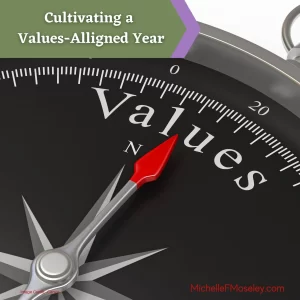
What are Values?
Values are fundamental principles and beliefs about what’s important in life. Our values guide our behavior and decisions in every aspect of life. When we are acting in alignment with our values, we tend to feel a sense of contentment or peace, even amidst life’s difficulties.
All of us have personal values that are important to us. Sometimes those personal values are shared with our family, society, religion, or larger culture. When personal values and cultural values match, it’s easier to live life in a way that reflects your values.
But imagine a situation where your personal values do not match those that surround you. Perhaps you value creativity while your family values conformity. Your religious community may value obedience while you value authenticity. These differences in values can create conflict, both internally and externally.
Identifying Your Values
The first step to living a values-aligned life is to identify your own personal values. I have listed several options below for doing this. However, here are a few important reminders as you complete any kind of values identification activity.
- All values are important to someone. There is no right or wrong when you are contemplating which values are most important to you. Every value listed will be very important to some people and not important at all to others. Try to approach the values identification activity with curiosity rather than judgement.
- Go with your first instinct. Try not to spend too much time contemplating where to place each value. Your first reaction is a good indicator of how important a value is to you.
- Notice what may be hard to sort. Some values may be more difficult to sort than others. You might notice a feeling that a particular value is supposed to be important when it really doesn’t feel that important to you. Notice that feeling. You may even ask yourself, “Who said this value should (or shouldn’t) be important?”
- Remember that you can always do the activity again. None of this is set in stone. You are free to do the values identification activity again to see if you get similar results or have a completely different reaction to certain values.
Values Sort Options
Here are a few options for completing a values sort, depending on your preferences.
Online Values Card Sort – This online sorting activity allows you to sort through 50+ values a few times, narrowing down the number each time until you have identified your top 5 values. (Note: You do not have to enter any contact information at the end in order to be able to see your results – just click “skip.”)
Print-&-Cut Paper Values Card Sort – This sorting activity may be a good choice for those who prefer a more tactile option. You are able to print out 80+ values and use the categories of “not important”, “important”, and “very important” to sort them. You can move things around and see what values may overlap with one another in the way you understand them.
Values Card Sort with Optional Reflection – This online sorting activity allows you to sort the 80+ values from the previous version in an online format. You are able to place them into categories based on importance, then choose your top 5-10 most important values. There is also an option for additional reflection questions related to your values.
Examining How Your Values Match Your Life
You’ve identified your most important values. Now what?
The next step is determining if your current commitments and choices are aligned with your values. Take a few moments to think about the areas of life where you’re spending the most time, energy, or even money. This might include things like work, family, hobbies or special interests, travel, etc. It may also include things like healthcare, groceries, educational pursuits, utilities, or caring for aging family members.
Take a look back at those 5 values you identified as most important to you. Where do the things listed above – the areas where you’re spending a lot of time, energy, or money – fit within your values? You may find they fit together clearly and notice that you feel mostly content with your life at the moment.
However, for many of us, we find that there is some misalignment with our top values and the areas where we’re spending our time, money, or energy. This often contributes to feeling discontent and restless in our life.
What can you do to help ensure your values are reflected in your daily life?
Next Steps
Here are a few ideas for helping to ensure that your life overall is more aligned with the values that you identified as most important.
Notice where your values fit with current commitments. Where are your values already showing up in your life? Maybe you identified relationships as an important value and you make a point of meeting up with friends regularly. Perhaps creativity is an important value for you and you’ve made room for creative endeavors in your professional and/or personal life. Take notice of the ways that you have already incorporated your values into your life.
Identify new ways to incorporate your values into your life. Look for areas where you can incorporate important values into your life. If you chose compassion as an important value, what are some ways that you can act on your concern for others? Perhaps you could seek out local service organizations, coordinate a fundraising event within your workplace, or contact government officials to advocate for a cause. You may have chosen spirituality as an important value, and would find it helpful to locate new options for exploring spiritual practices. The more you are able to align your daily life with your most important values, the more satisfaction you are likely to experience.
Work with a supportive mental health professional who offers values-based services. Sometimes it can be helpful to have a trained professional help you identify your values and determine how you’d like to incorporate those values into your life. Often, therapists who incorporate DBT (Dialectical Behavior Therapy) or ACT (Acceptance and Commitment Therapy) components into their work will include discussion of values and support in creating a more values-aligned life. Many other therapists include values-based work in their services as well, so feel free to ask about it.
My work with folks often includes discussing values and figuring out which ones are most important to the individual, then incorporating those into their life. Many folks didn’t have a chance to consider or develop their own values earlier in life, often due to high-control situations that told them what should matter or due to lack of support to explore their own interests as they developed. For adults located in NC who are interested in exploring values in therapy, I welcome you to check out my website to learn more about my services, and complete a contact form if you are interested in scheduling a free, virtual consultation to see if we might be a good fit for working together.
Remember that values-alignment involves ongoing check-ins and shifts. It is expected that your values will shift and change over time, as you have new experiences and find yourself in different life circumstances. Remind yourself to check in regularly – quarterly, annually, every 5 years, whatever works for you – and take time to identify what values are most important to you at that point in time. Then, you can make any needed adjustments to ensure you continue to pursue a values-aligned life.
Michelle F. Moseley (she/her) is a Licensed Clinical Mental Health Counselor in NC. She believes ALL people deserve respect, compassion, and access to mental and physical healthcare. Michelle specializes in working with survivors of religious trauma, and with those who have body image concerns, finding there is frequent overlap in these areas. She also frequently supports late-identified neurodivergent individuals as they navigate the grief and relief of a new understanding of self. You can learn more about Michelle by visiting her website at MichelleFMoseley.com or following her on Instagram – @therapy_with_michelle
Sign-up for Michelle’s Monthly Email Newsletter to make sure you never miss a blog post