
January is Spiritual Abuse Awareness Month, but spiritual abuse happens regardless of the date on the calendar.
In previous posts, I’ve shared some information to help in understanding spiritual abuse and religious trauma.
Spiritual abuse is a misuse of power in a religious / spiritual context. This misuse of power may include manipulating or coercing another person to do something, or utilizing specific doctrines or sacred texts to elicit feelings of shame or fear. In some cases, a religious / spiritual system is set up in such a way that the same individual may be both experiencing spiritual abuse while also carrying out spiritual abuse towards others.
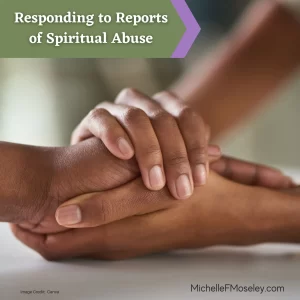
What can you do if someone tells you about an experience of spiritual abuse?
I’m answering this question as both a survivor of spiritual abuse and a licensed mental health counselor who specializes in working with survivors of spiritual abuse. My personal experience of telling others about my spiritual abuse included both responses that magnified the harm, as well as responses that helped me move toward healing.
As a trained and licensed mental health counselor, I have spent 10+ years learning and researching complex trauma and the specifics of supporting survivors of spiritual abuse and religious trauma. I have engaged in 1000s of hours of training. I have worked with almost 1000 survivors who are each on their own healing journey. I have seen the good, the bad, and the ugly of how folks respond to disclosures of spiritual abuse.
Recommendations for Responding to Reports of Spiritual Abuse
Here are 7 recommendations for responding if/when someone tells you about spiritual abuse:
Listen. Give the individual your full attention and listen to whatever they are comfortable sharing. This is not a time for excess questions or trying to figure out logistics. If a spiritual abuse survivor has trusted you enough to open up about their experience, honor their trust in you by listening to what they share and believing them.
Avoid minimizing or blaming. Minimizing experiences of spiritual abuse can look like asking questions such as “are you sure you understood what happened?” Minimizing can also include making statements such as “everyone experiences a little church hurt” or “that’s never been my experience with [the abuser].” Blaming the survivor can include asking things like “what were you doing to provoke them?” or saying “If you had been acting in accordance with Scripture, you wouldn’t have needed to be punished.” This is not helpful!
Sharing an experience of spiritual abuse can feel scary and vulnerable. Many survivors have spent months or even years wrestling with questioning whether they deserved the abuse they experienced or asking themselves, “was it really that bad?” If someone is telling you of their experience with spiritual abuse, minimizing the experience or blaming them simply adds onto the abuse.
Ask what would be helpful. Offer suggestions if needed. Inquire from the survivor what would be helpful for them in the moment and beyond. Be sure to get their consent before doing anything, even if you believe it would be supportive. If they are unsure about what would feel helpful in the moment, ask if you can offer some suggestions.
In the moment suggestions might include:
- Holding their hand or giving them a hug to show your presence and support.
- Offering to listen more or to sit in silence for a period of time.
- Giving them comfort through a warm blanket, favorite fidget item, or soothing beverage.
Longer term suggestions might include:
- Offering to accompany them as they tell someone else.
- Being available for them so they do not have to interact with their abuser alone.
- Helping them find resources for support in whatever way feels good to them.
Assist with finding resources for support / healing. Finding resources for a survivor of spiritual abuse can look different for different people. It is important to ensure that the person who has entrusted you with their experience has given consent for you to assist with finding resources, and that you are committed to offering only resources that meet their stated needs. For example, if someone is not ready to talk to a therapist, providing a list of local therapists will likely feel overwhelming or dismissive rather than helpful.
Some types of resources that may be helpful:
- Books or podcasts from other survivors. Hearing others’ stories can help with understanding your own experience.
- Connecting with a community that feels supportive and accepting. This can take a variety of forms from a local knitting group to an online space to a religious / spiritual gathering of a different type. Honor what the survivor requests and help them locate options for connection.
- Individual or group therapy with a licensed professional who understands spiritual abuse and religious trauma.
Help with making reports to authorities, if necessary. In some cases of spiritual abuse, there may also be aspects that need to be reported to authorities. This may include things like sexual abuse of minors or coercion to use illegal substances. For many folks and for a variety of reasons, the involvement of legal authorities can come with fear of additional harm. Please be aware of these intersections of needing to protect others and personal fear of legal involvement as you support the survivor in making any necessary reports.
Maintain the relationship. Continue to show up for and be supportive of the person who opens up to you about their spiritual abuse. Often, when someone shares their experience, they are met with disbelief or invalidation. Even those who may initially listen eventually turn their backs on the person in time. The abuse victim is then left feeling isolated and alone, while also dealing with the impacts of the abuse.
This person trusted you enough to share something painful with you. Keep the connection with them. This doesn’t mean every interaction has to be focused on the spiritual abuse or the person’s current beliefs. Do the things you’ve always done together – grab lunch, go for a walk, visit a local museum. Keep showing up and letting them know you still care, that you believe them, and that you are available to support them in whatever way they may need.
Work toward decreasing the likelihood of future harm. Spiritual abuse is far too common. Be part of the solution to this problem. This work may include a variety of things such as:
- Being vocal about harm that has occurred. Ensuring that those who have been abused are not the only ones speaking out. (Avoid sharing someone’s specific story or confronting their abuser without consent.)
- Ensuring that any religious or spiritual spaces you are part of have procedures in place for abuse, including spiritual abuse, to be reported and addressed in ways that provide safety and support to the victim(s).
- Participating in (and encouraging faith leaders in your community to participate in) educational training about mental health, trauma, and preventing spiritual abuse. One such option is the Mental Health for Faith Leaders training that I provide.
Final Takeaways
I hope you have found this post helpful in providing some options for responding well if/when someone tells you about an experience of spiritual abuse. Your role in the abuse victim’s life will likely influence what is most helpful in your response.
Survivors: Your experience is real and your reaction is valid. Abuse takes away a person’s sense of control and safety. Spiritual abuse can also attack one’s sense of meaning and core identity. Resources are out there to support you on your journey. In NC, learn more about the Religious Trauma Counseling services I provide.
Friends / Family: Listen. Allow space for whatever emotions or reactions come up. Offer support while allowing the person who was abused to have autonomy in guiding any action. This helps to give them back some of the power and personal control that is lost in abusive situations.
Therapists: Believe the person’s experience. Utilize your training and skills to be fully present in a non-judgemental way, helping the individual in front of you regulate their nervous system and understand the impacts of their experience. Remember this may be slow work as you help rebuild a sense of self and safety that was shattered. Invest in continuing education related to working with those who have had spiritually abusive experiences – learn more here.
Clergy: Acknowledge the courage necessary for someone to share with you about an experience of spiritual abuse. Put protocols in place to decrease the likelihood that abuse happens and to effectively address any situations that do arise. Seek out training about mental health and trauma-responsiveness from trained resources, such as the Mental Health for Faith Leaders training I provide.
Michelle F. Moseley (she/her) is a Licensed Clinical Mental Health Counselor in NC. She believes ALL people deserve respect, compassion, and access to mental and physical healthcare. Michelle specializes in working with survivors of religious trauma, and with those who have body image concerns, finding there is frequent overlap in these areas. She also frequently supports late-identified neurodivergent individuals as they navigate the grief and relief of a new understanding of self. You can learn more about Michelle by visiting her website at MichelleFMoseley.com or following her on Instagram – @therapy_with_michelle
Sign-up for Michelle’s Monthly Email Newsletter to make sure you never miss a blog post