

Boundaries are an important part of the therapeutic relationship. They help clarify expectations and create safety and structure for everyone involved.
I’m Michelle F. Moseley, a licensed mental health counselor who provides telehealth therapy services. I specialize in working with folks who have experienced boundary violations in important relationship. Counselor Brief recently invited me to contribute to an article on the topic of boundaries within telehealth therapy. I shared about the importance of communicating the guidelines early so individuals can make an informed decision about working together.
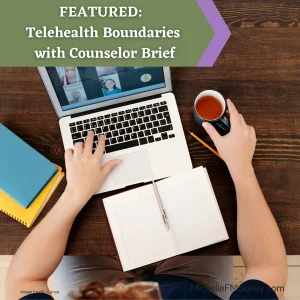
Here is a tidbit of what I shared:
“I clearly outline that I am not able to provide a therapy session while the client is driving. Counseling can bring up intense emotions, and it is part of my role as a licensed mental health professional to ensure that clients are safe, both physically and psychologically, during our telehealth sessions. Operating a vehicle requires focus and concentration; therefore, attending therapy while driving is not conducive to being able to fully engage in either the therapy or the vehicle operation.”
Read the whole article – “Boundary Lines that Move Telehhealth Therapy to Safer Settings” – here (scroll to the bottom for my contribution).
Michelle F. Moseley (she/her) is a Licensed Clinical Mental Health Counselor in NC (#12491). She believes ALL people deserve respect, compassion, and access to mental and physical healthcare. Michelle specializes in working with survivors of religious trauma, and with those who have body image concerns, finding there is frequent overlap in these areas. She also frequently supports late-identified neurodivergent individuals as they navigate the grief and relief of a new understanding of self. You can learn more about Michelle by visiting her website at MichelleFMoseley.com or following her on Instagram – @therapy_with_michelle
Sign-up for Michelle’s Monthly Email Newsletter to make sure you never miss a blog post